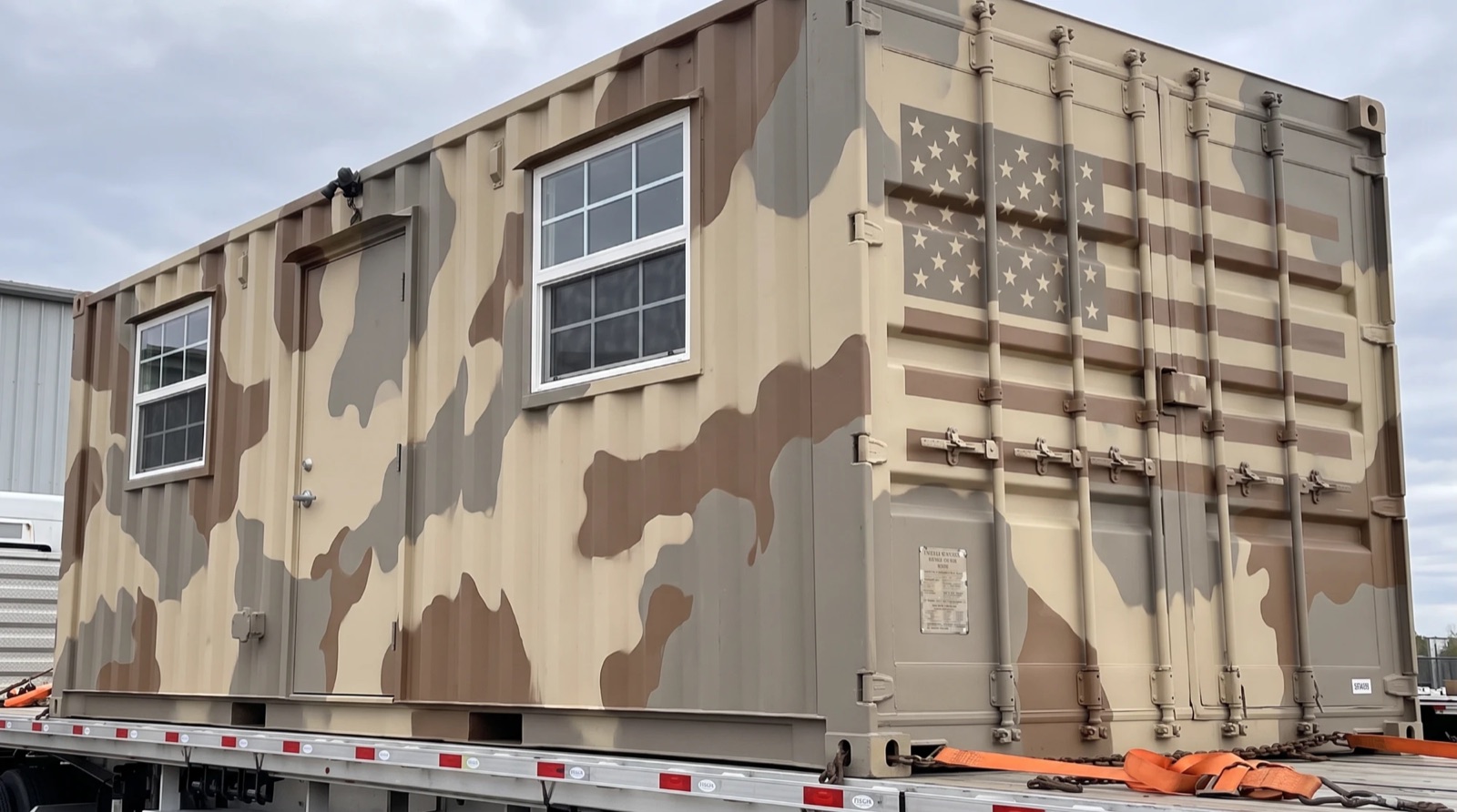
What gets bought
Federal, state and military buyers use modular wherever they need secure, finished space without a multi-year building program. In practice that's secure storage and equipment enclosures, command posts and operations centers, billeting, guard houses and entry control points, communications shelters, training and range support buildings, and shower and laundry facilities.
How the buying works
Federal opportunities are posted on SAM.gov, which is also where companies register to do business with the government. Registration gives a company a Unique Entity ID, and the Defense Logistics Agency assigns a CAGE code. Contracting officers search by NAICS code. Prefabricated metal buildings fall under 332311.
A lot of the work doesn't come straight from the agency. It comes through a prime contractor who holds the government contract and subcontracts pieces of it, so for a modular supplier the prime relationships matter as much as direct bids. Some contracts are set aside for small businesses or specific socioeconomic categories, and the solicitation will say so.
To be straightforward about where we stand: North American Modular's SAM.gov registration is underway. Our UEI and CAGE code will be posted on this site once it's complete. We don't claim credentials we don't hold.
Requirements that keep showing up
No two solicitations are the same, but a few requirements come up again and again.
For Department of Defense buildings, UFC 4-010-01 (DoD Minimum Antiterrorism Standards for Buildings) sets standoff distances and construction requirements for inhabited buildings. It can change where a building sits, what glazing it uses and how it's framed. Military projects also tend to reference other Unified Facilities Criteria for design and UFGS sections for materials and workmanship.
Domestic content rules matter for pricing. The Buy American Act, and on some contracts the Trade Agreements Act, limit where materials and products can come from. Figure out which applies before you price, not after.
If a SCIF is in scope, ICD 705 and its technical specifications govern construction, acoustics and access control. Get the accrediting official involved early. And for structure, expect the International Building Code and ASCE 7, often at a higher risk category for essential facilities.
When it has to ship by more than truck
Some units need to move by rail, sea or air. Intermodal shipping uses ISO corner castings at standard dimensions, and containers in international transport need a CSC safety approval plate. Air transport brings size and weight limits set by the aircraft. If a solicitation calls for any of this, read it first, because it shapes the entire design.
The paperwork is part of the product
Government projects run on submittals. Expect a register listing every document the contracting officer has to approve: shop drawings, product data, structural calculations, test reports, a quality control plan and warranty documents, plus inspection records for each unit at delivery. Suppliers coming from commercial work often underestimate this. It needs to be priced and staffed from day one.
For a prime, a modular sub is only as good as their submittals, their schedule and their warranty. What they're looking for is simple: complete submittals on time, a lead time in writing (ours is 8-12 weeks for most projects), and one company that stands behind the work after it's delivered.
Working on a government or defense project? Send us your drawings, equipment list or solicitation and we'll come back with specifications and pricing.
Request a Quote